
What is a manufacturer's certificate of origin and when do you need one?

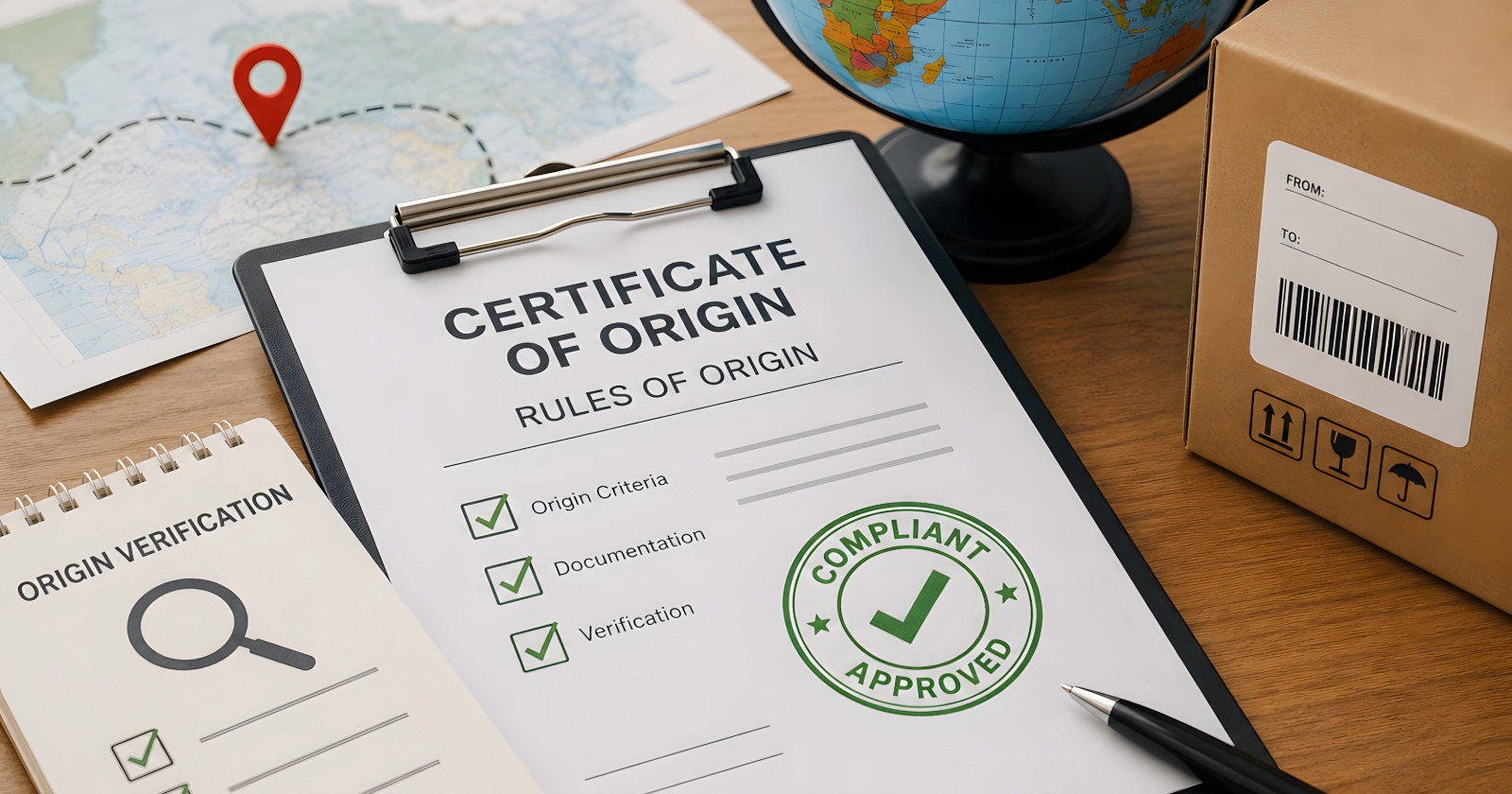
A manufacturer's certificate of origin (MCO) is the ownership document a manufacturer issues for a new vehicle, trailer, or boat before it has ever been titled. You need it to get the first title and registration. Once a state issues that first title, the title becomes the ownership record, and the MCO is turned in with the title application.
What is a manufacturer's certificate of origin?
The Texas Department of Motor Vehicles (TxDMV) calls the MCO a trailer's "birth certificate," because it shows the unit's unique identifying information from the factory. TxDMV says a trailer manufacturer is required to provide an MCO to dealers or purchasers for every vehicle it manufactures. Some makers call the same paper a manufacturer's statement of origin (MSO).
The MCO only matters until the first title is issued. A used vehicle that already has a title transfers on that title. A brand-new unit, or one a dealer never titled, transfers on the MCO. Because the MCO is the only ownership paper until that first title, keep the original somewhere safe and do not write on it beyond the assignment you are completing.
Which vehicles still come with an MCO?
New vehicles that a state titles start with one, including cars, trucks, motorcycles, trailers, and titled boats. TxDMV lists the MCO as the evidence of ownership for a new trailer. A used trailer over 4,000 pounds gross weight needs a certificate of title, while a used trailer of 4,000 pounds or less can use a bill of sale plus a registration receipt, or a title if one was issued.
Street-legal low-speed vehicles also start with one. The Florida Department of Highway Safety and Motor Vehicles (FLHSMV) lists the MCO first among the documents needed to title and register an LSV, along with Form HSMV 82040, the Application for Title. TxDMV likewise accepts an MCO as evidence of ownership for a neighborhood electric vehicle.
Boats count as well. In Michigan, MCL 324.80306 says a manufacturer, importer, dealer, or other person may not sell a new watercraft to a dealer for display and resale without delivering a manufacturer's or importer's certificate with the assignments needed to show title in the purchaser. The Michigan Department of State (MDOS) says dealers handle the title and registration application for watercraft they sell, so a buyer from a dealer may never hold the MCO at all.
How is an MCO assigned to a buyer?
An MCO carries assignments much like a title does. When a manufacturer ships a unit to a dealer, the MCO is assigned to that dealer. When the dealer sells the unit, the dealer assigns the MCO to the retail buyer. Each assignment should show the buyer's name, the date, and the signature of the party transferring the unit.
In Illinois, the Illinois Secretary of State (SOS) describes the end of that chain from the buyer's side. Its FAQ says that to apply for a title, you need a title application, the applicable tax form, and a surrendered title or a manufacturer's certificate of origin signed to you by the seller. Check that the last assignment names you, spelled correctly, before you pay. A crossed-out name or a VIN that does not match the unit can stall the title application, so compare every field on the MCO to the vehicle before money changes hands.
If you buy a never-titled unit from a private seller, such as a trailer someone bought new and never registered, ask for the assigned MCO and a vehicle bill of sale that lists the VIN, price, date, and both parties. The MCO proves the factory origin, and the bill of sale proves the last step of the chain.
What replaces the MCO once the vehicle is titled?
The state certificate of title replaces it. After the first title is issued, every later sale uses the title, and the MCO is no longer the document that moves ownership.
Michigan law shows what happens to the paper. MCL 324.80307 says that when a watercraft has never been titled in Michigan, the title application must be accompanied by a manufacturer's or importer's certificate or other listed evidence, and the Secretary of State retains the evidence of title on which the certificate of title is issued. So the buyer usually gives up the original MCO at the title office. Make a copy for your records before you hand it in.
For a used unit, ask to see the title. If a seller offers only an MCO for a vehicle that has been titled before, treat it as a warning sign, because the state title has already replaced that MCO as the ownership document.
When does an MCO not lead to a regular title?
An MCO does not guarantee a standard title. MDOS says vehicles assembled from a kit designed for on-road use, often called kit cars, are titled as assembled vehicles even if a Manufacturer's Certificate of Origin is provided.
MDOS also says golf carts cannot be registered as on-road vehicles. If the vehicle's MCO shows that it meets federal rules for on-road use, the vehicle may be titled as a low-speed vehicle instead. Read the MCO before you buy, since the VIN, model year, and vehicle type printed on it can decide what kind of title or plate you can get.
What should you do if the MCO is lost?
Start with the party that issued or assigned it. If a dealer sold you the unit, ask the dealer to request a duplicate MCO from the manufacturer. If you bought directly from a manufacturer, contact it with the VIN or hull number and your proof of purchase.
Do not expect a homemade-trailer route to work for a factory unit. TxDMV warns that a manufactured trailer with missing paperwork cannot be registered as an assembled trailer. If no duplicate can be issued, ask your state titling agency which other ownership evidence it accepts. Keep the bill of sale, the payment record, and any dealer invoice, because every option starts with proof of purchase.
Be careful when a private seller cannot produce the original. A photocopy of an MCO, an MCO assigned to someone with no link to the seller, or no MCO at all means the buyer would be taking on the title problem. Walk away or insist that the seller resolve it before the sale.
Sources
- TxDMV, Trailers
- TxDMV, Unique vehicles
- FLHSMV, Low speed vehicles and golf carts
- Illinois Secretary of State, Title and registration FAQ
- MCL 324.80306, Manufacturer's or importer's certificate
- MCL 324.80307, Certificate of title application
- Michigan Department of State, Titles
- Michigan Department of State, Recreational vehicles and watercraft
Frequently Asked Questions
What is the difference between an MCO and a title?
An MCO is issued by the manufacturer for a new vehicle that has never been titled. A certificate of title is issued by a state. After the first title is issued, the title becomes the ownership document for every later sale of that vehicle.
Do you need an MCO to title a new trailer?
In Texas, yes. TxDMV lists the Manufacturer's Certificate of Origin as the evidence of ownership for a new trailer and says a trailer manufacturer must provide one to dealers or purchasers for every vehicle it manufactures.
What happens if you lose a manufacturer's certificate of origin?
Ask the selling dealer or the manufacturer for a duplicate, using the VIN and your proof of purchase. If no duplicate can be issued, ask your state titling agency what other ownership evidence it accepts, and keep your bill of sale and payment records.
Along with his duties at YourLeaseAgreement, Paul Oak is a writer covering private sale transactions, vehicle transfers, and consumer legal documents. He breaks down state-by-state requirements into plain English so buyers and sellers can navigate the paperwork without hiring a lawyer. When he's not researching DMV forms and title transfer deadlines, he's probably arguing about which state has the worst bureaucracy.
View all posts →Create Your Bill of Sale
Generate a state-specific, professionally formatted bill of sale in minutes.
Get Started - $5