
New York Vehicle Bill of Sale Guide: Cars, Boats, Motorcycles and More

New York is one of the more paperwork-heavy states for private vehicle sales. The DMV here is strict about what it accepts, the tax implications are real, and the process varies enough between vehicle types that assuming it all works the same way is how people end up making multiple trips to the DMV office. Here's what you actually need to know.
New York Actually Recommends a Bill of Sale
Unlike Florida or Georgia where the bill of sale is technically optional and most sellers skip it, New York's DMV explicitly recommends completing a bill of sale for private vehicle transactions. The state even publishes its own form, the MV-912. You're not legally required to use it, but a properly completed New York vehicle bill of sale is what makes the tax calculation at the DMV go smoothly.
New York charges sales tax on vehicle purchases based on the purchase price or the vehicle's market value, whichever is higher. Without a documented sale price, the DMV defaults to market value. On a 2018 F-150 that sold privately for $19,500 but books at $24,000, the difference in sales tax at New York's combined state and local rates of up to 8.875 percent in some counties can exceed $400. That's real money the buyer overpays because no one filled out a form.
The Title Process in New York Is Specific
New York titles require the seller to complete the assignment section on the back of the title. This includes the seller's signature, the buyer's name and address, the sale price, the odometer reading, and the date of sale. Every field needs to be completed accurately. New York DMV clerks are not known for flexibility on incomplete paperwork.
One thing New York sellers miss regularly: if the vehicle is less than 10 years old, the odometer disclosure is mandatory and needs to match what's on the bill of sale. A discrepancy between the two documents creates a flag the clerk will ask you to explain, and you won't be there because it's the buyer standing at the counter.
New York Requires a Damage Disclosure
New York has a specific requirement that sellers disclose whether the vehicle has sustained damage exceeding a certain threshold. The title itself has a damage disclosure section. If the vehicle was in an accident and the repair cost exceeded the threshold, that needs to be noted. Sellers who skip this step thinking it won't come up are creating misrepresentation exposure that the as-is clause on your bill of sale won't fully protect you from, because New York's disclosure requirement is a separate legal obligation from the as-is nature of the sale.
Selling a Car in New York City Is Different From Upstate
New York City has its own additional tax on top of the state sales tax. The combined rate in the five boroughs can hit 8.875 percent compared to 7 to 8 percent in most of the rest of the state. This doesn't change the seller's obligations but it significantly affects the buyer's total cost. A buyer purchasing a $25,000 vehicle in Brooklyn pays over $2,200 in sales tax. A documented sale price on a properly completed bill of sale is the only way to make sure they're paying tax on what was actually agreed to rather than what the DMV system thinks the car is worth.
Boats in New York: The Title and Registration Split
New York requires boats with motors of 10 horsepower or more to be titled and registered. The title transfer for a private boat sale goes through the DMV, not a separate marine agency. The seller signs over the title, the buyer registers in their name, and sales tax is collected on the documented purchase price.
What catches New York boat sellers is the hull identification number requirement. The HIN needs to appear on the bill of sale and match the title. On older vessels where the HIN has been painted over or is difficult to locate, sort this out before the buyer shows up. The DMV won't process a transfer where the HIN on the paperwork can't be verified against the actual boat.
Motorcycles: One Extra Step Most Sellers Don't Know About
New York motorcycle sales follow the same general title transfer process as car sales, but there's one step that surprises sellers. New York requires a motorcycle inspection certificate as part of the registration process. The buyer needs a valid inspection sticker to register the bike. If the inspection is expired, the buyer either needs to get it inspected before registering or factor that cost into the negotiation.
This isn't technically the seller's legal responsibility the way a smog certificate is in California, but a motorcycle with an expired inspection is a motorcycle a buyer can't legally ride home. Know the inspection status before you list it and price accordingly if it's expired.
Trailers in New York
New York requires trailers over 1,000 pounds to be titled and registered. For a private trailer sale, the seller signs the title over just like a vehicle. Trailers under 1,000 pounds don't require a title but a bill of sale is still the right way to document the transaction and establish the sale price for tax purposes.
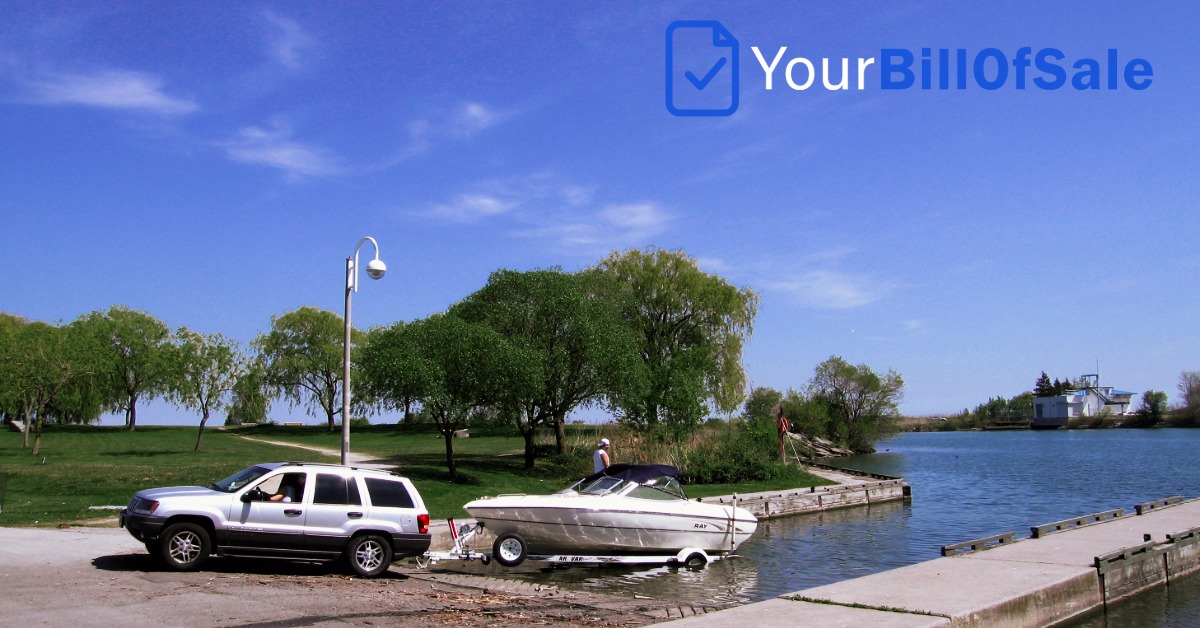
If you're selling a boat with a trailer as a package, both transfer separately. Two signed titles, one for the boat and one for the trailer. A single bill of sale can cover both as long as each item is itemized with its own description and value.
The As-Is Clause Matters More in New York Than Most States
New York small claims court handles disputes up to $10,000 in town and village courts and up to $5,000 in city courts. Filing fees are under $20 in most jurisdictions. A buyer who paid $12,
Frequently Asked Questions
Do you need a bill of sale to sell a car in New York?
Technically no, but skipping it is where people lose money. The DMV recommends it for a reason. Without a documented sale price, they can tax the buyer based on market value instead, which is often higher.
How much can not having a bill of sale actually cost?
Easily a few hundred dollars. If the DMV uses book value instead of your actual sale price, the buyer pays tax on the higher number. In NYC, where rates can reach 8.875%, that difference adds up fast and often comes back to the seller as a problem.
Do boats and trailers follow the same process as cars in New York?
Similar, but with important differences. Boats require HIN verification, and trailers may need separate titles depending on weight. These are the kinds of details that cause delays if you assume everything transfers the same way.
Along with his duties at YourLeaseAgreement, Paul Oak is a writer covering private sale transactions, vehicle transfers, and consumer legal documents. He breaks down state-by-state requirements into plain English so buyers and sellers can navigate the paperwork without hiring a lawyer. When he's not researching DMV forms and title transfer deadlines, he's probably arguing about which state has the worst bureaucracy.
View all posts →Create Your Bill of Sale
Generate a state-specific, professionally formatted bill of sale in minutes.
Get Started - $5