
Florida Has a $18,000 Boat Tax Cap. Here's How to Use It

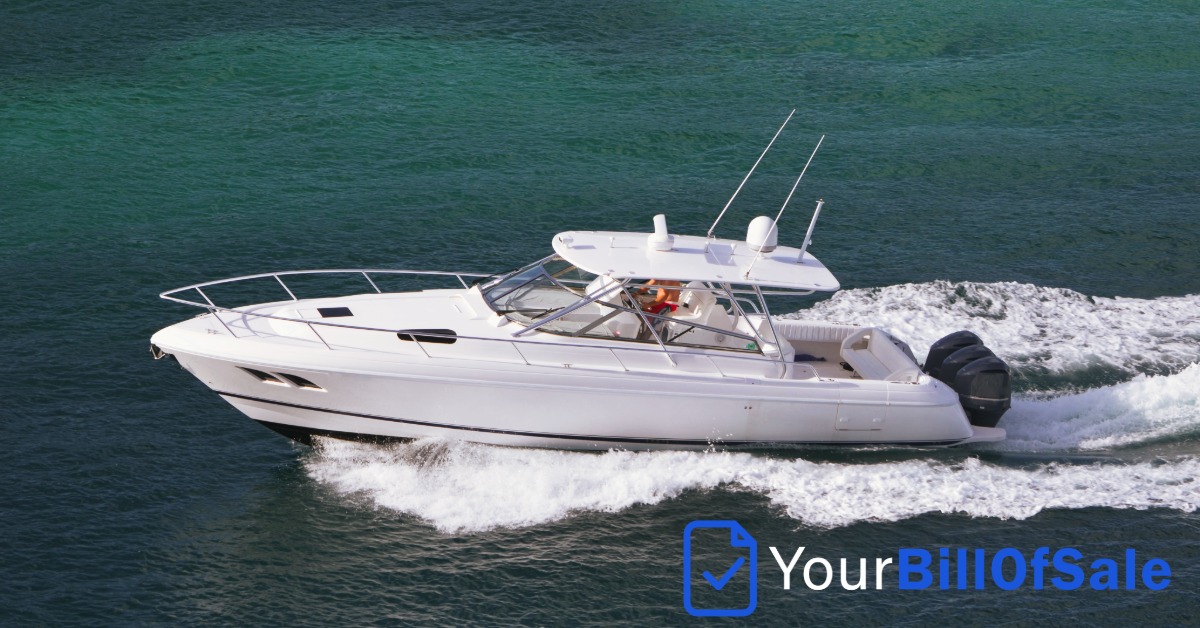
Florida is the boating capital of the country. More registered recreational vessels than any other state, year-round water access, and a private boat market that never really slows down. It also has one of the most buyer-friendly tax rules in the country for high-value vessel purchases, and most people buying and selling boats privately have no idea it exists.
What the Cap Actually Is
Florida charges a six percent sales tax on private boat purchases. On a $40,000 boat that's $2,400. On a $100,000 boat that would be $6,000. Except it isn't, because Florida caps the sales tax on vessel purchases at $18,000 regardless of the purchase price.
That cap kicks in on any boat sale over $300,000. Buy a $400,000 sportfisher privately in Florida and you pay $18,000 in sales tax, not $24,000. Buy a $600,000 center console and you still pay $18,000. The cap is absolute and it applies to private sales, not just dealer transactions.
For anyone buying or selling a high-value vessel in Florida, this is a meaningful number worth understanding before the transaction closes.
Why the Bill of Sale Is the Key to Using It
The tax cap doesn't do anything for you automatically. It applies to the documented purchase price at the county tax collector's office. If you walk in with a signed title and no bill of sale showing what was actually paid, the tax collector uses the vessel's assessed fair market value from their system to calculate the tax. On a boat that transacted below market value, or where the seller and buyer agreed on a price that reflects the vessel's actual condition rather than a database estimate, that distinction matters.
A properly completed Florida boat bill of sale with the actual agreed purchase price is the document that tells the tax collector what the transaction was. Without it, you're at the mercy of whatever their system says the boat is worth. On a $280,000 vessel that sold for $245,000 because the engines need work, the difference between paying tax on the actual sale price versus the system's assessed value at six percent is $2,100. That's a real number that a properly completed bill of sale captures and a handshake transaction loses.
What the Bill of Sale Needs to Include
A Florida boat bill of sale for a high-value vessel transaction needs to be complete and specific. The full legal names and addresses of both buyer and seller. The vessel's year, make, model, hull identification number, length, and engine details. The documented purchase price. The date of transfer. An as-is clause acknowledging the buyer's acceptance of the vessel's current condition. Signatures from both parties.
If the sale includes a trailer, itemize it separately with its own value. Trailers transfer separately in Florida and are taxed separately. A bill of sale that bundles the boat and trailer under a single price creates ambiguity at the tax collector's office that slows down the transfer and can result in the clerk assigning values arbitrarily between the two.
If equipment is included in the sale, list it. Electronics packages, outriggers, dive gear, life rafts. A specific inventory of what transfers with the vessel protects both parties from post-sale disputes about what was and wasn't part of the deal. On a $350,000 boat with $40,000 in electronics, what's included in the sale is not a casual conversation.
Where the Transfer Actually Happens
Florida boat title transfers go through the county tax collector's office, not the DMV. The buyer brings the signed title, the bill of sale, a valid ID, proof of current registration if applicable, and payment for the transfer fees and sales tax. Processing times vary by county. Some offices complete it same day. Some mail the new title within a few weeks.
One thing worth knowing: Florida counties with high boat traffic like Miami-Dade, Broward, Monroe, and Collier can have significant wait times at the tax collector's office during peak season. If you're buying or selling and the timing of the registration matters, factor that in. Making an appointment where available is worth the extra step.
Vessels Documented With the Coast Guard Work Differently
Some Florida vessels, particularly larger and higher-value boats, are documented with the U.S. Coast Guard rather than titled at the state level. A Coast Guard documented vessel transfers through the National Vessel Documentation Center using a specific bill of sale form rather than a state title transfer. The buyer still needs to pay Florida sales tax on the purchase, but the title transfer process is federal rather than going through the county tax collector.
If you're buying a documented vessel in Florida, confirm whether it's state-titled or Coast Guard documented before closing. The bill of sale requirements are similar but the transfer process is different, and showing up at the tax collector's office with a documented vessel expecting a standard title transfer is a wasted trip.
The As-Is Clause on a High-Value Vessel Sale
On a $400,000 boat, the as-is clause in your bill of sale is not a formality. A buyer who discovers significant issues after closing and wants their money back has real motivation to pursue legal remedies when the number is that large. Florida's circuit court handles civil disputes above the small claims threshold and attorneys get involved quickly at those dollar amounts.
A signed bill of sale with an explicit as-is clause, combined with any written disclosures about the vessel's known condition, is the documentation that establishes the buyer accepted the vessel as described. On a transaction of this size, a pre-purchase survey is standard practice and noting in the bill of sale that the buyer had the opportunity to conduct one adds another layer of protection.
Out-of-State Buyers and the Use Tax Question
If the buyer is from another state and the vessel will be primarily kept and used outside of Florida, they may not owe Florida sales tax at all, or may owe a reduced amount depending on how long the vessel stays in Florida waters after purchase. Florida has specific rules about vessels that leave the state within a certain number of days of purchase.
This is an area where a tax professional's input before the transaction closes can save a buyer significant money on a high-value purchase. The rules are specific and the amounts at stake on a $500,000 vessel are substantial enough to justify the consultation. The bill of sale still needs to be completed correctly regardless of where the tax obligation ultimately lands.
If Someone Else Is Handling the Transaction
On large boat transactions it's not uncommon for brokers, attorneys, or trusted third parties to handle the closing on behalf of one or both parties. If the title owner can't be present, a power of attorney authorizing the representative to sign the bill of sale and title documents is required. Florida recognizes power of attorney for vessel title transactions. Without it, an unauthorized signature on a Florida boat title creates a defective transfer that takes significant time and legal involvement to correct.
The Short Version
Florida's $18,000 boat tax cap is one of the most valuable tax rules in the state for anyone transacting on a high-value vessel. It's automatic above $300,000 and it applies to private sales. But the documented sale price on a properly completed Florida boat bill of sale is what makes the rest of the transaction work correctly, from the tax calculation at the county tax collector's office to the as-is protection that covers you after the keys change hands. Generate the bill of sale before you close. It's the document that makes the tax cap, the title transfer, and the post-sale protection all function the way they're supposed to.
Frequently Asked Questions
What is Florida’s boat sales tax cap and why does it matter?
Florida caps boat sales tax at $18,000, no matter how expensive the vessel is. Once you cross roughly $300,000, you stop paying additional tax. On higher-end boats, that’s thousands saved automatically, but only if the transaction is documented correctly.
Does the tax cap apply automatically when you buy a boat?
The cap exists automatically, but your tax calculation still depends on the documented purchase price. If that price isn’t clearly recorded, the tax collector may rely on their own valuation instead, which can cost you money.
Why is the bill of sale so important in a high-value boat purchase?
It’s the document that tells the tax collector what you actually paid. Without it, you’re not controlling the number used to calculate tax. On a six-figure transaction, that difference can easily run into the thousands.
Jill Stradley writes about private sales, title transfers, and the paperwork that trips people up when buying or selling cars, boats, and everything in between. She got interested in the topic after a used car sale gone wrong taught her more about DMV requirements than she ever wanted to know. Now she breaks down what each state actually requires so other people don't have to learn the hard way.
View all posts →Create Your Bill of Sale
Generate a state-specific, professionally formatted bill of sale in minutes.
Get Started - $5