
20+ States Require an FFL Dealer for Private Gun Sales. Check Yours Here.

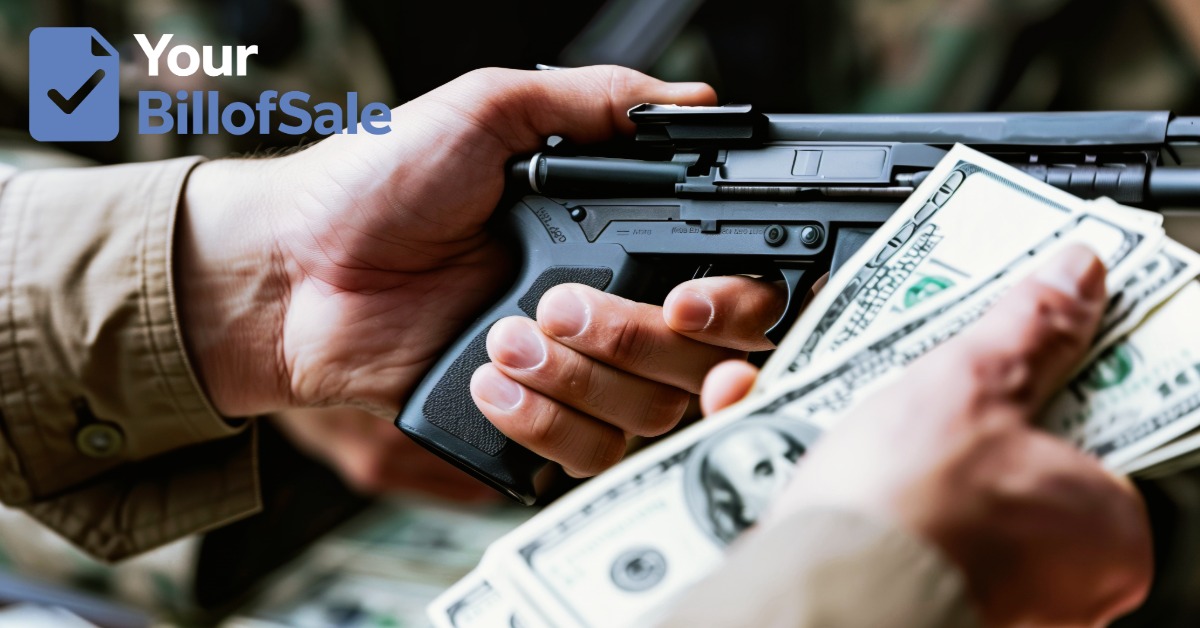
Federal law allows private individuals to sell firearms to each other without going through a licensed dealer. That's the baseline most people know. What a lot of people don't know is that more than 20 states have passed their own laws that override that federal baseline entirely, requiring a background check through an FFL dealer for every firearm transfer regardless of whether it's a private sale or not. If you're selling a gun privately and you're operating on the assumption that federal law is all that applies to you, there's a real chance you're wrong.
The Federal Baseline and Why It's Not the Whole Picture
Under federal law, licensed dealers must run background checks through the National Instant Criminal Background Check System for every sale. Private individuals who are not licensed dealers are exempt from this requirement as long as both parties are residents of the same state and the seller has no reason to believe the buyer is prohibited from owning a firearm.
That exemption is real and it still applies in roughly half the country. But states have the authority to pass their own laws that are stricter than the federal standard, and a significant and growing number of them have done exactly that. Selling a gun privately in one of these states without going through an FFL dealer isn't a technicality you can argue around. It's a state law violation that can carry serious consequences.
States With Universal Background Check Requirements
As of 2025, the states that require background checks for all private firearm transfers include California, Colorado, Connecticut, Delaware, Hawaii, Illinois, Maryland, Massachusetts, Michigan, Nevada, New Jersey, New Mexico, New York, Oregon, Pennsylvania, Rhode Island, Vermont, Virginia, Washington, and the District of Columbia. Florida passed legislation that affects certain transfer requirements as well. This list has grown substantially over the past decade and continues to expand as more states pass universal background check legislation.
In these states, the transaction works like this: seller and buyer agree on a sale, they go together to a licensed FFL dealer, the dealer runs the background check through NICS, and if the buyer clears, the transfer completes. The dealer charges a transfer fee, typically between $25 and $75, which is usually paid by the buyer. The seller receives payment for the firearm. Both parties walk away with documentation of a legally completed transfer.
Check Your State Before You List
The fastest way to confirm what your state requires for a private firearm sale is the Notarization and Title Requirements Checker on YourBillOfSale. Select your state and the firearm document type and the tool tells you immediately whether your state requires the transaction to go through an FFL dealer. It covers all 50 states and DC and reflects current requirements, not laws from several years ago.
Don't rely on what you heard from someone at a gun show or what a forum post from 2019 says about your state's rules. Laws in this area have changed rapidly and the consequences of getting it wrong are serious enough that a ten-second lookup is not an unreasonable step to take before you complete a transaction.
What Happens If You Skip the FFL in a State That Requires One
Completing a private firearm transfer without going through an FFL dealer in a state with a universal background check law is a criminal offense under that state's law. Penalties vary by state but can include misdemeanor or felony charges depending on the jurisdiction and circumstances. The fact that the transaction would have been legal under federal law is not a defense against a state law violation.
It also doesn't matter if the buyer passes what would have been a background check. The violation is the failure to go through the required process, not the outcome of that process. A seller in California who completes a private sale without going through a licensed dealer has violated state law regardless of whether the buyer was a perfectly legal purchaser.
Even in States That Don't Require an FFL, Document Everything
In the roughly half of states where private firearm sales can still be completed without a dealer, documentation is your primary protection. A signed firearm bill of sale records the make, model, caliber, and serial number of the weapon, the full legal names and addresses of both parties, the date of transfer, the sale price, and a buyer statement confirming they are legally eligible to possess a firearm in your state.
That serial number documentation matters more than anything else on the form. If the firearm is ever used in a crime or reported stolen after your sale, law enforcement traces it by serial number. Your bill of sale is the documentation showing you transferred it to a specific person on a specific date and that you completed the transaction in good faith. Without it, you're the last documented owner with no paper trail showing the gun left your possession.
Verify Residency Before You Sell
Federal law prohibits private individuals from selling handguns to residents of another state. Long gun sales across state lines have their own set of rules and generally need to route through a dealer in the buyer's home state to be legal. Before you complete any private firearm sale, ask for a government-issued photo ID and confirm the buyer's address is in your state.
This is a step that takes fifteen seconds and eliminates residency ambiguity entirely. In states like Georgia, Texas, Florida, and Ohio where private sales don't require an FFL dealer, the residency check and the bill of sale are the two most important steps in the transaction. Both are simple. Neither takes more than a few minutes.
Going Through an FFL Even When You Don't Have To
In states where private sales are still legal without a background check, routing the transaction through a licensed dealer anyway is worth considering for high-value firearms or sales to buyers you don't personally know. The transfer fee is typically $25 to $75. What you get in return is a background check confirming the buyer isn't prohibited, dealer paperwork documenting the transfer, and a transaction structure that removes nearly all of your post-sale legal exposure.
A private sale completed through an FFL in a state where it isn't required is a private sale that's essentially bulletproof from a documentation standpoint. The dealer keeps records for 20 years. The background check is on file. The transfer is documented through official channels. For a firearm worth $1,200 or more, the $50 transfer fee is a reasonable cost for that level of protection.
The Bill of Sale Still Matters Even With an FFL Transfer
Going through a dealer handles the background check and the official transfer paperwork. It doesn't document the agreed sale price, the condition of the firearm at transfer, or the private terms of the deal between you and the buyer. A signed firearm bill of sale covers those elements regardless of whether an FFL was involved. Generate one for every firearm transaction, dealer-assisted or not, and keep your copy.
The ten seconds it takes to check your state's requirements with the Notarization and Title Requirements Checker and the five minutes it takes to generate a proper bill of sale are the two steps that keep a private firearm sale legally clean from start to finish. Everything else is details.
Frequently Asked Questions
Do you need a background check for a private gun sale?
It depends on your state. Over 20 states require background checks through an FFL dealer for all private firearm transfers.
Can you legally sell a gun privately without a dealer?
Yes in some states, but others require all transfers to go through a licensed dealer regardless of whether it’s a private sale.
What states require background checks for private gun sales?
States like California, New York, New Jersey, Illinois, and several others require universal background checks for all transfers.
Along with his duties at YourLeaseAgreement, Paul Oak is a writer covering private sale transactions, vehicle transfers, and consumer legal documents. He breaks down state-by-state requirements into plain English so buyers and sellers can navigate the paperwork without hiring a lawyer. When he's not researching DMV forms and title transfer deadlines, he's probably arguing about which state has the worst bureaucracy.
View all posts →Create Your Bill of Sale
Generate a state-specific, professionally formatted bill of sale in minutes.
Get Started - $5